

More monkeys found their way to freedom! 25 vervets were released in the beginning of this year. After the successful release of the baboons last year, hopes were high: they turned out to be masters of adaptation.
Meet Florence
Meet Florence. A very pretty vervet lady with a strong character. She will spend time with her friends, but also likes to sit on her own, arms and legs spread, soaking up the sunshine. Joining the group again at her own time or foraging along with bestie Sarah and boyfriend Madson. Like so many of our other vervets she had a rough start in life. Vervets are very social with strong family bonds. And she lost her mother and all the rest of her family and friends. Sad times. But luckily somebody brought her to the Wildlife Centre. A new chance, a new family! But then the next challenge started, the first test in adaptation. She had to relearn her natural behaviour. 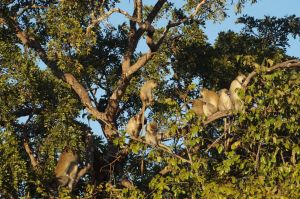 How to run and climb, avoid predators, to be social, groom and play with the other monkeys, when to stay and when to run. She went through a long process before she was ready to be released. In the end she had to pass the test: did she adapt well enough to join us in Kasungu??
Adapt to survive
She did well and joined her new family on this great adventure. But survival in the wild can be tough. A new environment again, new food and meeting new creatures of all shapes and sizes. It’s a dangerous world. Survival of the fittest: you will have to adapt to survive.
 Florence’s group struggled a bit more than the baboons. Being a lot smaller, they make an easier prey and they know it… They found their new environment very scary and it took them a while to start exploring and find a natural routine. They met predators along the way and Florence lost some of her new friends, including Sarah. A leopard and a very big eagle have been taking out the ones that didn’t adapt fast enough. The vervet technique is to outsmart your enemies and they are learning as they go.
Tough job
By this time Florence knows exactly how to behave to avoid getting caught. This doesn’t mean she’s out of danger, it does mean her chances of survival have improved and are still improving. She adapted very well. She is one of the fittest and is surviving, facing the world with a strong group with strong bonds. Madson is still there. Although he moved up in life, filling the vacant position of alpha male, which put some pressure on their friendship. It’s a tough job, but he is doing very well! At the end of this year we hope to welcome their baby in our group, who will start his life wild and remain wild, adapting and surviving.
 up at this crazy early hour you’d expect to get used to it. Nope. Still early, but duty, and more specifically the monkeys, call. Quick cold shower will get you going. Then 2 sandwiches each with peanut butter or jam, collect the telemetry, GPS, field book, observation papers and off we go. Finding our monkeys.
 Our baboons walked a lot and it sometimes took 1.5 hour to reach them, the vervets make our life a bit easier and usually within half an hour we are with the monkeys. Sometimes they will greet us by making short contact sounds. Sometimes they are still resting or warming up in the sun or grooming each other. Quite a peaceful and relaxing moment. After doing a census to see if everybody is there safe and sound, we start observing.
 We follow the monkey of the moment through the woodland that out here is rather hostile, it seems like every plant has a thorns, hairs or stickiness. The ‘wait a bit tree’ with its strong hooked thorns are responsible for at least 80% of the tares in our clothes. Shoes will last 1 season, then the strong grass has cut them to pieces. Or ‘eaten them’ like the Malawians say. The vervets are not bothered and eat them in return. We follow and observe them from dusk till dawn.
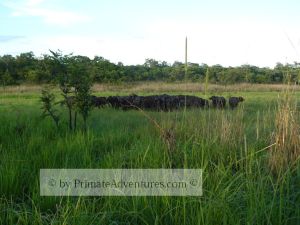 Roan, puku, kudu, duiker, reed buck, bushbuck, warthog, bush pig, elephant, sable, buffalo, we see them up close. Of course days can be hard with burning sun, long hours, pouring rain and not to mention tsetse flies and mozzies…But hey; no pain no game…And seeing these monkeys thrive in their wild life, having a 92% survival rate with the baboons and new borns being born wild and free are very rewarding results. The vervets have had a harder struggle, but seeing them overcome their fears and difficulties, seeing them learn how to survive and also become real wild and free monkeys is an amazing experience.
 Primate Adventures