
 In the past few months we have been reconsidering which way we want to go. Career wise, but in our case this also means quite literally ‘which way’. Return to Africa, try Asia, explore South America, so many possibilities! We gave up our job in Malawi to do interim management at Chimp Eden in South Africa. We knew this would be temporary, but this was an experience we didn’t want to miss out on. A dream job at this famous sanctuary for a renowned organization. But it also meant that after this project we had to find something new. We decided to do the thinking on the road. Driving through Kruger for a month seeing the most amazing wildlife and then down the South African coast accompanied by whales and dolphins.
Wildlife jobs: comfort versus bush life
We have liked all our wildlife jobs so far. But there’s a massive difference between a field job and an ‘office job’ at a wildlife sanctuary. Like with every job you can think of, there are pros and cons. The releases were extremely rewarding and life in the bush was great, but the days were very long, it was physically challenging and you
definitely miss a social life. The job at Chimp Eden was more social, gave us a  chance to use all of our capabilities to the max in a challenging job where a lot could be achieved, which is rewarding in another way. But sometimes you miss the bush life, elephants in your backyard and the direct contact with the animals. But how much did we appreciate a couch to sit on, hot water and a cold beer!!
Between ideals and pay
Our ideal would be a paid management position at a sanctuary where you can still be involved in rescues and other animal work sometimes. Quite specific right? But you have to form an ideal and work from there. We have met people who think it’s weird we’re planning a career. We’re animal people so we’re sup posed to just play around with animals a bit, have fun and not expect to ever make any money. That’s strange. Because we want to make a difference, help animals and people, often in ‘difficult’ countries, we’re not supposed to be serious about our jobs and not entitled to a salary? The fact that so little money is available in conservation and animal sanctuaries to pay proper salaries is a whole other subject to be discussed another time, but it’s not right. Nobody is in it to get rich. We would all just like a salary for the hard work we do like everybody else in every other sector.
Different continents and different species
Luckily with the experience we have now, we do have access to the few paid jobs  that are available. So what would be next? South America has many possibilities with an upcoming conservation sector, but little paid opportunities yet. North America has many wildlife job opportunities, but getting a visa is quite difficult. Also no wild primates. Same for Australia. Asia has many interesting and well-established organizations and would be a serious option. Africa has it all. Including the chimpanzees and the baboons we love so much. We explored the different opportunities and decided to work with our favourite species in an area that got the worst of everything throughout history. Where animals and people alike really really need a helping hand. In a centre where the people who run it are passionate and caring. Because we believe we can really make a difference there. In Africa. In the Democratic Republic of Congo. In South Kivu. In Lwiro. In the Centre de Rehabilitation des Primates de Lwiro.
We decided to offer our assistance for  free. For the reasons mentioned above. And because we are working towards that dream job. A job we love with a salary so we can continue to rescue animals, help people, protect forests and make a positive difference in this world in any way we can! The direction? Still Africa.
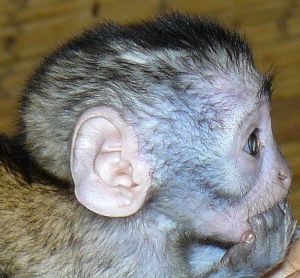 What do you think when you see baby monkeys? Cute hey! And if you see someone cuddling or bottle feeding a baby monkey, would you like to do that some time? Baby primates have a huge appeal to us. Being soft and furry with big eyes but so much like us, needing some love or playing around being crazy, hits a soft spot. Same here, of course. Gotta love your primates to make them your job. It’s a good thing. The appeal they have, might help save them from extinction!
 though only a small part of the job, besides all the hard work, we love it. There was Kobulu the young bonobo still with a human foster-mom before being introduced with the other bonobos. He came for a visit every morning, escaping from his mom sitting on the chair across from me, giving me a hug or challenging me for a game. Olivia the high maintenance little vervet princess who would have big tantrums for such a small girl, but would calm down in my hands. Vanga a gorgeous baby boy who refused to eat or drink after seeing his family being killed by hunters. With a lot of TLC I earned his trust and he took a bottle from me, heart-warming. Holding Kinness’ hand, a big male vervet with crooked teeth weird spots and big friendly eyes who had been a pet his whole life until he bit the children. He had to adjust to a life without the only family he had ever known, becoming a monkey again. Richard who we released with his new family in Kasungu becoming wilder and wilder, but occasionally still walking up to us to remove painful spear grass from our pants. Being cared for by a young now wild baboon is truly something special!
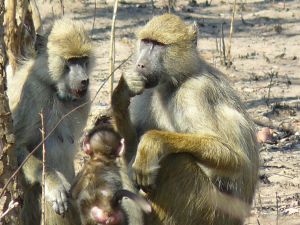 So back to you. We want to show you our beautiful, cute, interesting primates. They deserve your attention and we love it when you love them. What we will show you is all the cuteness when they play or cuddle with each other or just their beautiful faces. And we will tell you about our cherished moments. And we hope that that will be enough for you to enjoy and maybe for you to want to protect them and tell your friends the right way to enjoy these cuddly creatures: in the wild or in a good sanctuary.
 Primate Adventures